Healthcare Marketing Insights
Expert strategies, guides, and trends to help your medical practice grow.
Latest from the DocWin Blog
Expert insights, strategies, and trends to help healthcare providers thrive in the digital age.

(Pillar 1, Cluster 2, Blog 5) Local Listings Strategy for Healthcare Brands: Visibility Beyond Google
By building this "Digital Safety Net," you ensure that no matter how a patient searches—whether they ask Alexa, check their insurance portal, or use their iPhone maps—they find the same thing: A professional, accurate, and welcoming open door to your practice.

(Pillar 1, Cluster 2, Blog 4) NAP Consistency for Medical Practices: Why Accurate Listings Matter for SEO
By auditing your citations, separating your practitioner listings, and locking down your data aggregators, you build a fortress of trust around your brand. You ensure that when a patient reaches out for help, there is a hand there to catch them.

(Pillar 1, Cluster 2, Blog 3) How Google Business Profile Impacts Local SEO for Healthcare Professionals
If you optimize your profile—feeding it with accurate categories, fresh photos, regular posts, and a stream of reviews—you send a continuous signal to Google that you are the most relevant, prominent, and proximate choice for patients in your area. You turn the map into your greatest marketing asset.

(Pillar 1, Cluster 2, Blog 2) Optimizing Google Business Profiles for Healthcare: Best Practices That Work
If you do this consistently, Google will reward you. Your profile will rise in the rankings, your phone will ring more often, and you will capture the high-intent local traffic that your competitors are ignoring. You will transform from a pin on a map to a market leader.

(Pillar 1, Cluster 2, Blog 1) Google Business Profile Setup for Doctors, Clinics & Hospitals: Step-by-Step Guide
Your GBP is not just a directory listing; it is likely the single most viewed asset of your entire business. More people will see your Google Profile than will ever see your website homepage. By claiming, verifying, and optimizing this asset, you are planting your flag in the digital ground. You are telling the search engine and the patient: "I am here. I am qualified. And I am ready to help."
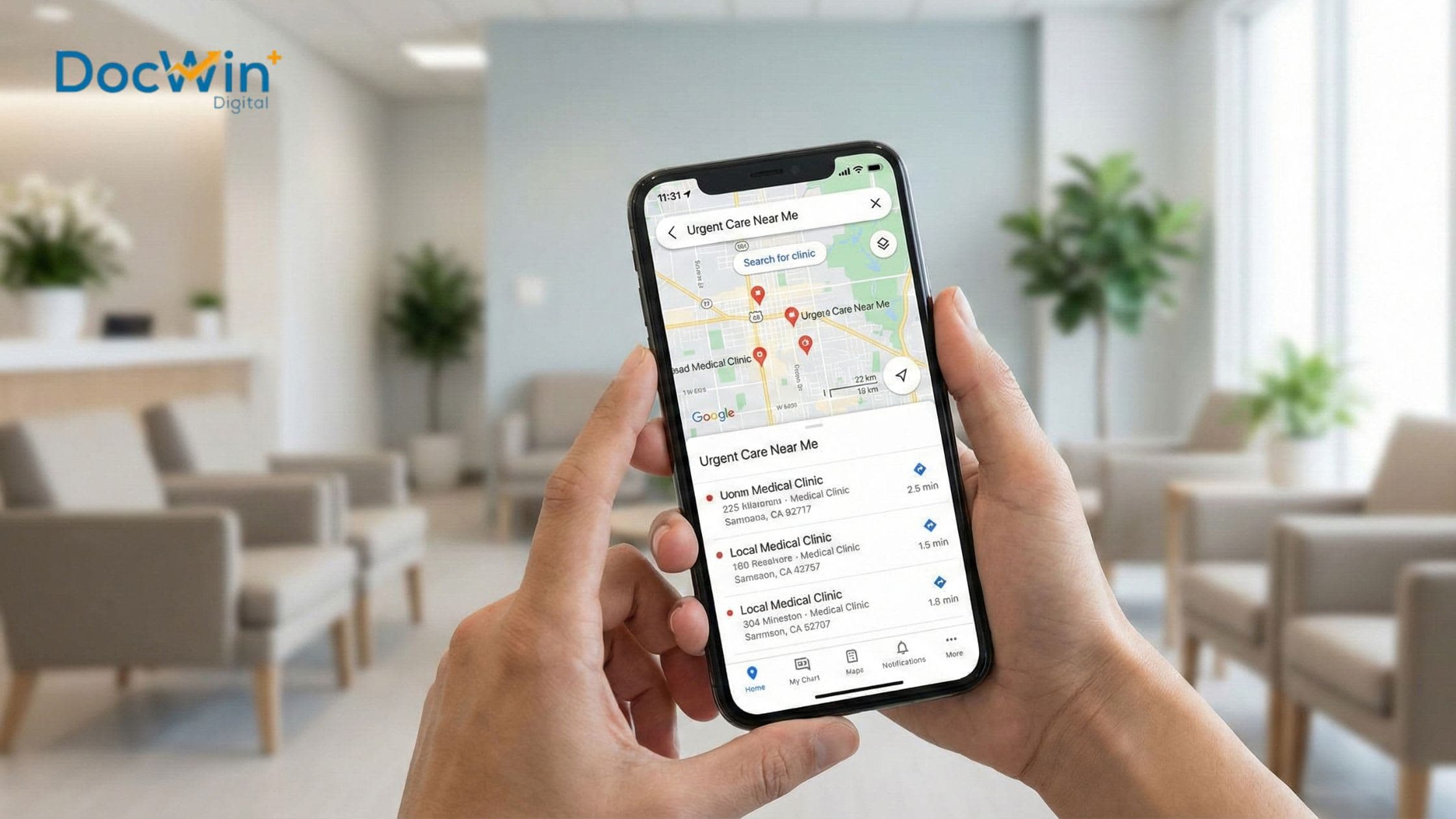
(Pillar 1, Cluster 1, Blog 24) Geo-Targeted Landing Pages for Healthcare SEO: Convert Local Searchers into Patients
So, location landing pages are your method of colonial expansion in the digital world. You don't need to sign a lease, hire staff, or buy equipment to enter a new market. You just need to build a high-quality, relevant digital destination.

(Pillar 1, Cluster 1, Blog 23) "Near Me" Searches in Healthcare: How to Capture High-Intent Local Patients
When you do this, you stop being just another website on the internet. You become a digital landmark. You become the reliable, convenient, and trusted answer for the patient who is in pain, in a hurry, and just around the corner. You capture the demand at the exact moment it exists.

(Pillar 1, Cluster 1, Blog 22) SEO for Multi-Location Healthcare Practices: Proven Best Practices
By building robust location pages, synchronizing your directory data, managing your reviews at the local level, and using the correct subfolder architecture, you can scale your practice infinitely without ever losing that "local trust."
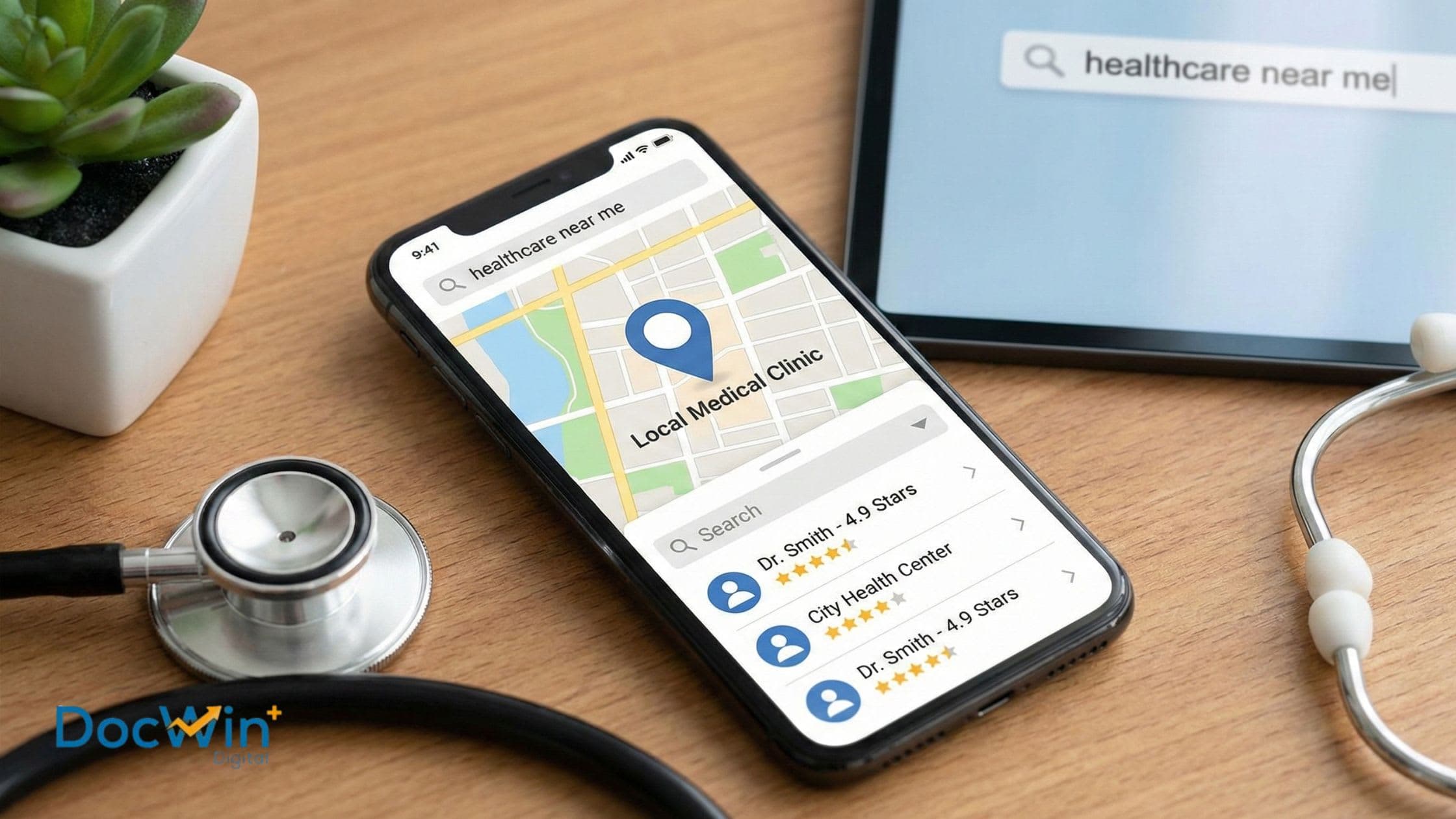
(Pillar 1, Cluster 1, Blog 21) Local SEO for Healthcare Professionals: Dominate Search Results in Your Area
By optimizing your Map Pack presence, locking down your NAP consistency across the web, and building deep local relevance on your website, you ensure that when a neighbor needs help, you are the first—and only—option they see. You turn Google Maps into your most powerful patient acquisition channel.

(Pillar 1, Cluster 1, Blog 20) Content Clusters & Pillar Pages for Healthcare SEO: A Strategic Framework
Google rewards this clarity with rankings. Patients reward this clarity with trust. Stop writing random posts. Start building your Pillars.

(Pillar 1, Cluster 1, Blog 19) How to Optimize Medical Service Pages for SEO and Patient Conversions
If you build it correctly—with robust SEO architecture, persuasive copywriting, and unshakeable trust signals—it will fill your waiting room while you sleep. If you neglect it, you are paying for traffic that flows right down the drain.

(Pillar 1, Cluster 1, Blog 18) Internal Linking for Healthcare Websites: Improve Rankings and User Experience
By building a robust, logical, and descriptive linking structure, you ensure that authority flows to where it is needed, and patients flow to where they can be healed. You turn a collection of isolated pages into a high-performance patient acquisition machine.
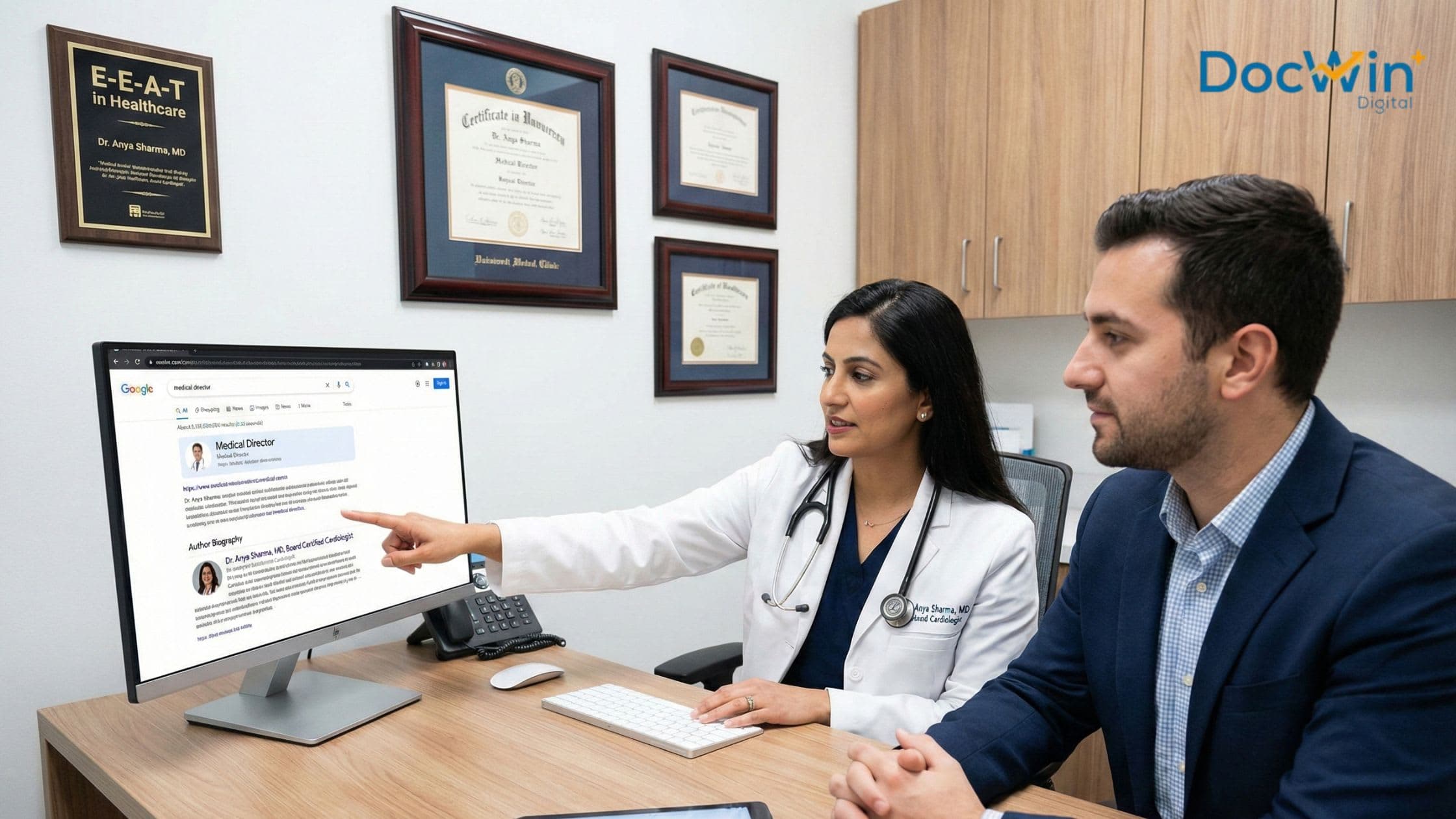
(Pillar 1, Cluster 1, Blog 17) E-E-A-T in Healthcare SEO: Build Trust, Authority & Medical Credibility
Google is asking the exact same questions. By optimizing for E-E-A-T, you aren't just satisfying a robot. You are building a digital presence that mirrors the excellence of your real-world practice. You are proving that you are the expert they have been searching for.

(Pillar 1, Cluster 1, Blog 16) How to Write SEO-Optimized Medical Content That Ranks and Converts Patients
When you master this formula, your website becomes more than a digital brochure; it becomes a 24/7 patient education engine that builds trust while you sleep.

(Pillar 1, Cluster 1, Blog 15)Long-Tail Keywords for Healthcare SEO: Capture High-Intent Patient Searches
So, what are long tail keywords? They are the conversations your patients are desperately trying to have with you. A broad keyword is a shout in a crowded room. A long-tail keyword is a whisper in the ear. It is intimate, specific, and highly relevant.

(Pillar 1, Cluster 1, Blog 14) Healthcare Keyword Research: Find What Patients Are Actually Searching For
Your job is to identify these questions and provide the best, most authoritative, and most empathetic answer on the internet. By speaking their language—not just your medical school language—you create a connection that transcends the screen. You stop being a search result and start being their doctor.

(Pillar 1, Cluster 1, Blog 13) HTTPS, SSL & Website Security for Healthcare SEO: Why Trust Signals Matter
An SSL certificate is the cheapest, most effective investment you can make in your digital marketing. It is the digital equivalent of washing your hands before surgery. It’s basic, it’s mandatory, and it signals to the world that you are a professional who takes safety seriously.

(Pillar 1, Cluster 1, Blog 12) Fix Crawl Errors and Indexing Issues on Healthcare Websites: A Practical Guide
Resolving crawl errors is not a one-time "fix it and forget it" event. The internet is dynamic. Links break, servers hiccup, and code gets updated. You should check your "Page Indexing" report in Google Search Console at least once a month. Think of it like checking the vitals of your patient.

(Pillar 1, Cluster 1, Blog 11) Schema Markup for Healthcare Websites: Help Google Understand Your Medical Content
Schema is the infrastructure of the future. As search becomes more AI-driven (with tools like Google SGE and ChatGPT), having structured data is the only way to ensure these AI models understand who you are. It is the ultimate future-proofing strategy for your medical practice.

(Pillar 1, Cluster 1, Blog 10) Mobile-First SEO for Healthcare Websites: Why Mobile Optimization Is Non-Negotiable
If you optimize for mobile devices, you are optimizing for the reality of modern behavior. You are meeting the patient where they are, with the experience they demand.

(Pillar 1, Cluster 1, Blog 9) Website Speed Optimization for Healthcare: Improve Rankings and Patient Experience
By implementing a rigorous technical optimization strategy—compressing images, upgrading servers, enabling caching, and using a CDN—you remove the friction between your expertise and the patient's need. You stop losing patients to the "Back" button and start welcoming them into your practice.

(Pillar 1, Cluster 1, Blog 8) Technical SEO for Healthcare Websites: The Complete Audit Checklist
Technical SEO is not the glamorous part of marketing. It involves server logs, code minification, and schema validation. However, for a medical practice, it is the bedrock of your digital existence. A site that passes this technical SEO audit checklist is a site that Google trusts, and more importantly, a site that patients can access quickly and securely when they need care the most.

(Pillar 1, Cluster 1, Blog 7) Why SEO Is Critical for Building Digital Authority in Healthcare
Why do doctors need SEO? Because in the digital age, visibility is authority. You could be the most skilled practitioner in the world, but if your expertise is not findable, it cannot help the patients who need it most. SEO is the bridge between your clinical years of study and the modern patient who is searching for answers.

(Pillar 1, Cluster 1, Blog 6) White Hat vs Black Hat SEO in Healthcare: Ethical SEO for Sustainable Growth
In the medical field, your reputation is your most valuable asset. Choosing what is black hat SEO over a sustainable SEO growth strategy is a gamble where the house (Google) always wins. While the White Hat path requires patience with medical SEO, the results are permanent, ethical, and highly profitable. By focusing on clinical authority, technical excellence, and genuine patient value, you build a digital presence that search engines—and patients—can trust for years to come.

(Pillar 1, Cluster 1, Blog 5) Common Healthcare SEO Mistakes That Hurt Rankings (and How to Fix Them)
Avoiding these common SEO mistakes is the difference between a website that sits idle and one that drives a steady stream of new patients. Most doctor website SEO errors are solvable with the right technical attention and a commitment to clinical authority. By fixing your local listings, improving your site speed, implementing proper schema, and focusing on patient-centric content, you can fix low rankings and build a digital asset that grows with your practice.

(Pillar 1, Cluster 1, Blog 4) SEO Timelines for Healthcare Websites: When to Expect Results (and Why It Takes Time)
The answer to "how long does SEO take?" is that it depends on how quickly you can prove your trustworthiness to an algorithm designed to be skeptical. While the first 6 months may feel quiet, they are the most critical period for building the foundation of your practice’s future. In healthcare, speed is a function of authority, and authority is a function of consistency.

(Pillar 1, Cluster 1, Blog 3) Is SEO Worth It for Doctors? The ROI of Organic Growth
Determining is SEO worth it for doctors comes down to your vision for your practice's growth. If you want a sustainable, high-authority brand that attracts patients while lowering your long-term costs, organic search is the most effective tool at your disposal. While the initial investment is significant, the healthcare SEO return on investment far outpaces traditional advertising or short-term PPC campaigns.

(Pillar 1, Cluster 1, Blog 2) Healthcare SEO vs Traditional SEO: What Doctors, Clinics & Hospitals Must Know
The difference between healthcare SEO and regular SEO is not subtle; it is foundational. While the ultimate goal—visibility—remains the same, the path to achieving it is paved with stricter regulations, higher ethical standards, and a more complex user intent. Treating your medical practice like a standard e-commerce store is a strategy that ignores the realities of the modern digital health landscape and could potentially harm your reputation.

(Pillar 2, Cluster 2, Blog 4) Prevent Reputation Damage from Social Media: What Healthcare Professionals Must Know
How to protect reputation on social media is about more than just avoiding "cancellation." It is about building a digital presence that is as disciplined, professional, and patient-centered as your physical clinic. In a world where patients use social platforms to "vet" their providers, your digital behavior is a primary indicator of your clinical quality.

(Pillar 2, Cluster 2, Blog 3) Handling Fake Reviews: Legal and Ethical Approaches for Healthcare Practices
Learning how to remove fake reviews is a critical skill for the modern healthcare leader. A fraudulent review is an attack on your professional integrity, but it doesn't have to define your practice.

(Pillar 2, Cluster 2, Blog 2) How to Protect Your Medical Brand Online from Negative Reviews and Misinformation
How to protect your reputation online is not about achieving perfection; it is about demonstrating accountability, integrity, and authority. In the healthcare world, a negative review is not a failure—it is a data point. How you defend against it, how you respond to it, and how you learn from it is what defines your brand.

(Pillar 2, Cluster 2, Blog 1) Monitoring Your Digital Reputation: Tools and Techniques for Healthcare Professionals
How to monitor online reputation is not a marketing luxury; it is a vital function of modern medical practice. In a world where your reputation precedes you into the exam room, you cannot afford to be the last person to know what is being said about you.

(Pillar 2, Cluster 1, Blog 8) Best Practices to Collect Patient Reviews Across Multiple Platforms
Knowing where to get reviews is the difference between a "local clinic" and a "regional authority." In a world where patients are skeptical and data is fragmented, a single-platform reputation is a vulnerability.

(Pillar 2, Cluster 1, Blog 7) Get More Google Reviews for Doctors and Clinics Without Violating Policies
Google review policies aren't there to stop you from growing; they’re there to ensure the "winners" are the ones who actually provide great care. In a world where patients are skeptical and the algorithm is smart, authenticity is your only sustainable advantage.

(Pillar 2, Cluster 1, Blog 6) Patient Review Management Systems: Simplifying Online Reputation for Doctors & Clinics
Patient review management is no longer an optional marketing activity; it is a core operational system. In a world where 94% of patients use online reviews to evaluate a provider, the "Software" you choose is as important as the "Stethoscope" you use. It is the tool that allows you to hear the collective voice of your community and respond with precision and care.

(Pillar 2, Cluster 1, Blog 5) How Online Reviews Influence Patient Decisions and Drive Clinic Growth
Do online reviews matter? They are the most important digital currency in the modern healthcare economy. They are the confluence of human psychology, algorithmic technicality, and clinical integrity. In a world where patients are overwhelmed with choices and underwhelmed with trust, your online reviews provide a clear, authoritative signal that your practice is the right choice.

(Pillar 2, Cluster 1, Blog 4) Automating Patient Reviews for Healthcare Practices: Tools, Tips & Strategies
In the high-velocity world of 2025 healthcare, you cannot rely on manual effort to build a world-class reputation. Learning how to automate reviews is the bridge between being a "local doctor" and being a "regional authority." By selecting the right review automation tools, integrating them deeply into your clinical workflow, and maintaining a commitment to HIPAA and Google compliance, you can ensure your practice’s growth is fueled by a constant, authentic stream of patient voices.

(Pillar 2, Cluster 1, Blog 3) Respond to Patient Reviews on Google: Best Practices to Build Trust and Reputation
In the world of Google reviews for doctors, the patient always has the first word—but you have the most important word. How to respond to reviews is a clinical skill as much as it is a marketing one. It requires a balance of empathy, legal caution, and strategic intent. By following review response best practices, you protect your practice from the "Data Decay" of unmanaged feedback and build a digital reputation that reflects the high quality of your physical care. Your responses are not just

(Pillar 2, Cluster 1, Blog 2) How to Encourage Patients to Leave Online Reviews Ethically and Legally
Learning how to ask for reviews in a medical context is a masterclass in balance. You must be assertive enough to capture the "Patient Voice" but disciplined enough to respect the boundaries of the law. In the high-stakes world of healthcare online reviews, the practices that win are those that treat the "review request" with the same level of care as a clinical diagnosis. By following ethical review requests and maintaining HIPAA compliant review requests, you aren't just building a star ratin

(Pillar 2, Cluster 1, Blog 1) Google Review Generation for Doctors, Clinics & Hospitals: Proven Strategies That Actually Work
Mastering how to get more Google reviews is the most cost-effective marketing strategy in existence. Unlike paid ads, which require constant investment, a high-volume, high-rating Google profile is an asset that works for you 24/7. It builds trust before the patient ever picks up the phone.

Track Website Performance for Healthcare Practices: Analytics and Key KPIs
Mastering website analytics for beginners is the single most effective way to optimize your clinic's digital marketing budget. By understanding that every click is a data point that can help you provide better care, you can build a digital presence that truly performs. We have explored how to setup Google Analytics, identified the website KPIs that drive growth, and provided methods to track patient behavior.

Healthcare Website Forms That Convert: Reduce Abandonment and Increase Submissions
Mastering form design best practices is the final and most important step in your conversion optimization strategy. By understanding that a form is the digital bridge between an interested visitor and a booked patient, you can build a presence that truly grows your practice. We have explored the psychological drivers of abandonment, the technical refinements needed for speed, and the strategic power of progressive disclosure.

CTA Optimization for Healthcare Websites: What Actually Gets Patients to Take Action
Mastering the art of the Call to Action is the final and most critical step in your digital marketing strategy. By understanding that a CTA is a tool for clinical guidance, you can build a digital presence that truly converts. We have explored the strategic importance of CTA placement website logic, the psychological impact of CTA copy, and the technical refinements of button optimization.

Trust Signals That Increase Conversions on Healthcare Websites
Mastering the implementation of trust signals for websites is the final and most important step in your conversion strategy. By understanding that trust is built through a combination of social proof, professional credentials, transparency, and technical excellence, you can build a digital presence that truly converts. We have explored the psychological foundations of trust, the impact of social proof medical websites, and the essential credibility indicators that reassure modern patients.

Patient Conversion Landing Pages for Healthcare: Structure, Messaging, and Trust Elements
Mastering landing page best practices is the most effective way to optimize your practice's digital ROI. By understanding that a landing page is a targeted tool for a specific clinical need, you can build a digital presence that truly converts. We have explored the strategic landing page structure, the essential landing page elements for trust, and the data-driven methods used in landing page optimization.

Conversion Optimization for Medical Websites: Turn Visitors into Booked Appointments
Mastering what is conversion rate optimization is the final and most important step in your digital marketing journey. By understanding that a website is a tool for action, not just information, you can build a practice that truly thrives.

Responsive Web Design for Healthcare: Why Mobile Is Non-Negotiable
Mastering responsive web design is no longer an optional upgrade; it is a foundational requirement for any modern medical practice. By understanding that your patients are mobile-first, you can build a mobile responsive website that truly supports their needs.

Core Web Vitals for Healthcare Websites: Google's Performance Metrics Explained
Mastering what are Core Web Vitals is one of the most effective ways to modernize your clinic's digital marketing. By understanding that LCP, CLS, and INP are direct measures of user frustration or satisfaction, you can build a site that truly serves your patients.

Website Speed Optimization for Medical Practices: Why Performance Directly Impacts Trust
Mastering website speed optimization is one of the most effective ways to increase your clinic’s ROI. By understanding that every millisecond of delay directly impacts patient trust and conversion, you can build a digital presence that truly heals. We have explored the psychological link between speed and trust, the technical standards for a fast loading website, and the specific website optimization tips needed for media and mobile users.

Healthcare Website Optimization: Improve Speed, Stability, and Patient Experience
Mastering website performance optimization is one of the most effective ways to increase your practice's ROI. By understanding that every second of load time directly impacts patient trust and conversion, you can build a digital presence that truly performs. We have explored the critical link between speed and trust, the technical standards for a fast loading website, and the specific website optimization tips needed for media and mobile users.

Telemedicine & Virtual Consultation Integration for Healthcare Websites: What Works and Why
Mastering the implementation of a telemedicine integration website is one of the most effective ways to grow your medical practice in the post-pandemic era. By understanding that virtual care is an extension of your physical office, you can create a site that truly heals.

Appointment Booking Integration for Medical Websites: Reduce Drop-Offs and Increase Bookings
Mastering the implementation of an online appointment booking system is one of the most effective ways to grow your medical practice. By understanding that scheduling is the "Final Frontier" of the digital patient journey, you can create a site that truly converts. We have explored the evolution of digital access, the technical nuances of booking widget healthcare, and the essential security protocols for patient appointment software. Your website’s booking tool is more than just a calendar; it
HIPAA-Compliant Web Forms for Medical Websites: Collect Patient Information Safely
Mastering HIPAA compliant forms is one of the most effective ways to modernize your clinic while protecting your clinical reputation. By understanding that every form field is a commitment to privacy, you can build a digital presence that is both high-performing and bulletproof. We have explored the legal necessity of secure web forms healthcare, the operational benefits of patient intake forms online, and the technical standards required for safe data collection healthcare.

Secure Patient Data on Healthcare Websites: Encryption, Privacy, and Protection Protocols
Learn how to secure patient data online. Discover essential website data encryption, HIPAA protocols, and healthcare data security for medical practices

Frontend vs Backend Development for Medical Websites: What Healthcare Decision-Makers Should Know
Understanding the synergy between frontend vs backend development is the key to creating a world-class healthcare website. By recognizing that the "Visual" and the "Logical" are equally important, you can build a digital presence that is both beautiful and bulletproof. We have explored what is frontend development as the patient’s primary interface and what is backend development as the clinical engine that ensures security and compliance.
SEO-Friendly Website Development for Healthcare: Technical Foundations That Support Rankings
Mastering SEO friendly website development is one of the most effective ways to ensure the long-term growth of your medical practice. By understanding that SEO begins in the code, you can build a site that is naturally authoritative and easy for patients to find. We have explored the importance of clean technical SEO development, the power of a logical SEO website architecture, and the necessity of optimizing for technical SEO foundations like speed and security.

Choosing the Right Platform for Healthcare Websites: WordPress vs Website Builders vs Custom Development
Mastering the WordPress vs custom website decision is the first step toward a successful long-term digital strategy. Whether you prioritize the flexibility of a CMS or the absolute performance and security of a custom build, your choice should be driven by the needs of your patients and the operational capacity of your staff. We have explored the WordPress pros and cons, the technical superiority of custom builds, and the rapid deployment of website builders.

Mobile UX Design for Healthcare Websites: Optimize for On-the-Go Patient Research
Mastering mobile UX best practices is no longer a luxury for medical practices; it is a foundational requirement for survival in the digital age. By shifting your focus to a mobile first design, you are aligning your practice with the actual behavior of your patients. We have explored how to optimize for mobile users through technical speed, touch-friendly interfaces, and simplified content hierarchies. Remember that your website is the digital bridge to your clinical care, and that bridge must

Reducing Friction in Healthcare Website User Flows: Remove Barriers to Patient Conversion
Mastering the art of reducing website friction is the single most effective way to turn a standard clinical website into a powerful patient acquisition tool. By understanding that every digital obstacle is a barrier to care, you can create a site that truly serves your community. We have explored how to improve user flow, remove conversion barriers, and streamline website experience through both design and technical optimization. Remember that in healthcare, a frictionless experience is not just
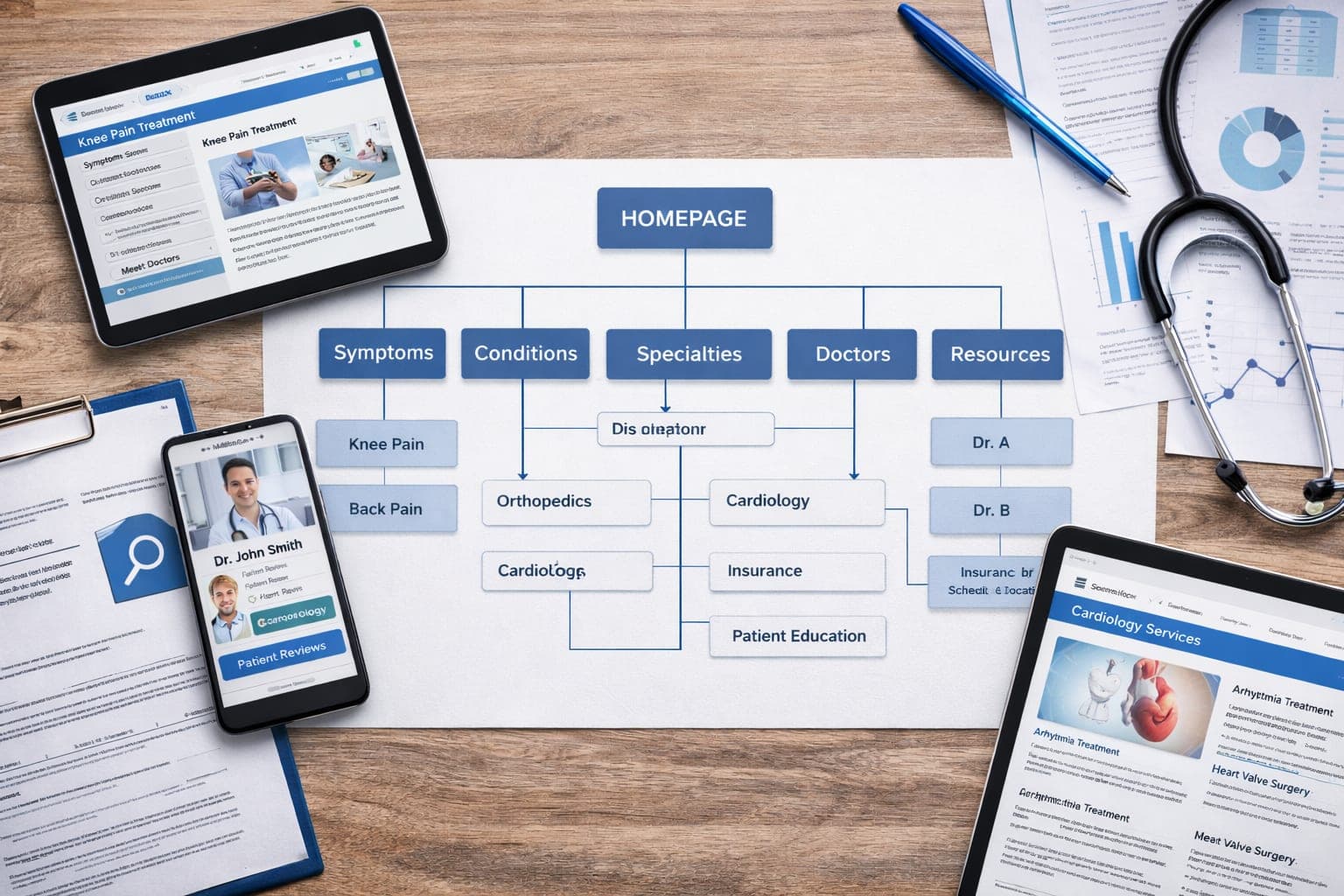
Information Architecture for Healthcare Websites: Organize Medical Content for Clarity
Mastering information architecture (IA) in website design transforms a complex medical practice into a clear digital leader. As the “brain” of your website, IA ensures patients find what they need easily and without friction. Through logical hierarchy, empathy-driven structure, and professional information design, your website becomes more than a sitemap—it becomes the foundation of strong patient-doctor relationships.
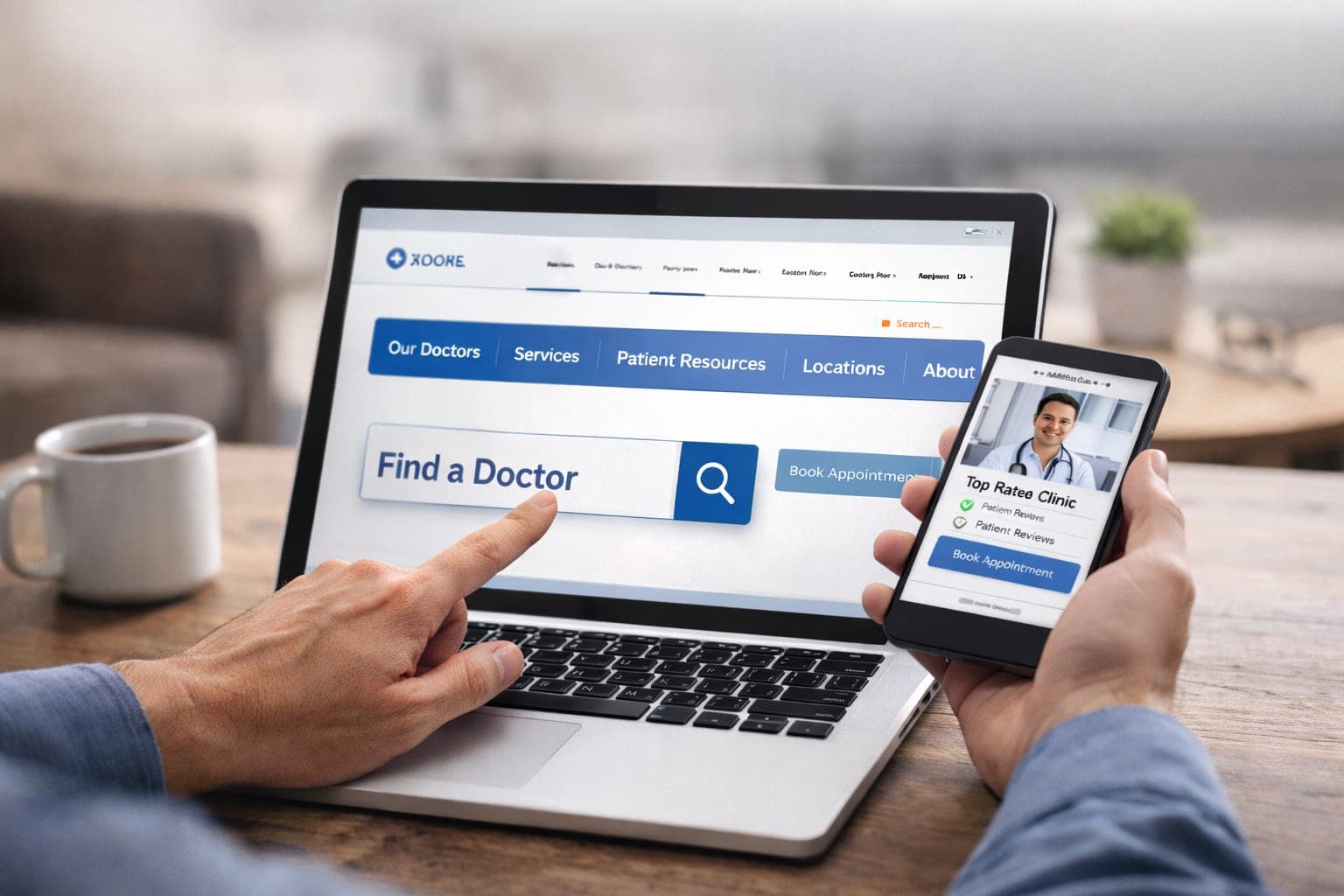
Healthcare Website Navigation Best Practices: Reduce Friction and Improve Conversions
Mastering website navigation best practices is essential for modern healthcare websites. Clear, patient-focused navigation reduces anxiety, improves usability, and helps users find care faster. By simplifying menus, designing mobile-first layouts, and structuring intuitive site flows, your clinic’s website becomes more accessible, trustworthy, and conversion-focused. Your navigation is the first impression of your digital presence—make it clear, welcoming, and easy to use.
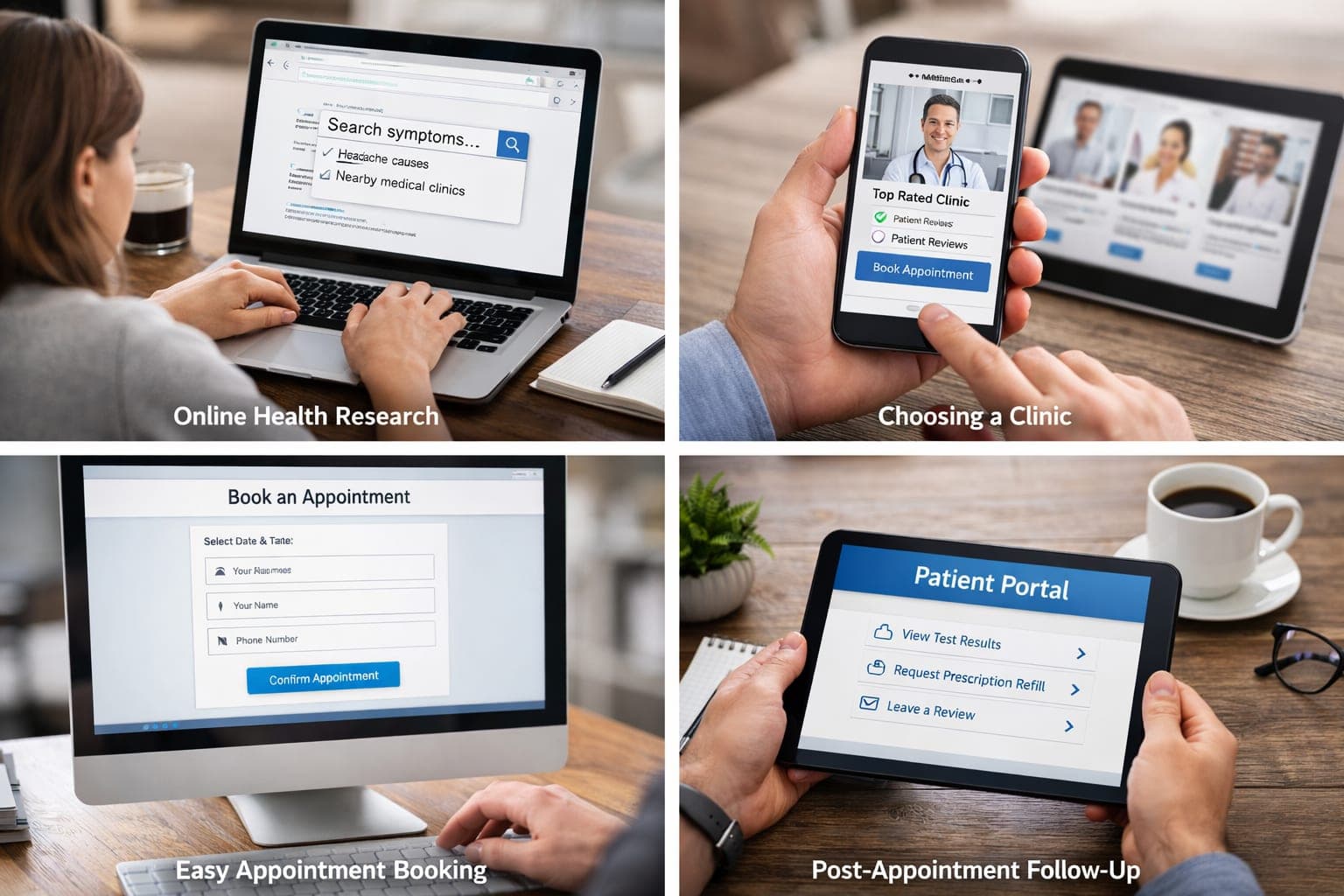
Patient Journey Mapping for Medical Websites: From First Visit to Booked Appointment
Mastering customer journey mapping is the single most effective way to optimize your practice’s digital ROI. By understanding that a patient’s path is emotional, logical, and technical, you can create a user flow website that guides them seamlessly from their first symptom search to their first appointment. We have explored how the awareness, consideration, and decision phases each require a unique blend of empathy and efficiency.

Healthcare Website UX Design: Creating Patient-Centered Digital Experiences
Investing in UX design is one of the most effective ways to grow your practice online. A patient-centered website design removes barriers and makes it easier for people to seek care. By applying healthcare UX principles—such as reducing friction and mapping the patient journey—you can turn your website into a powerful patient engagement tool. A great user experience is seamless and invisible; patients only notice it when everything works effortlessly.
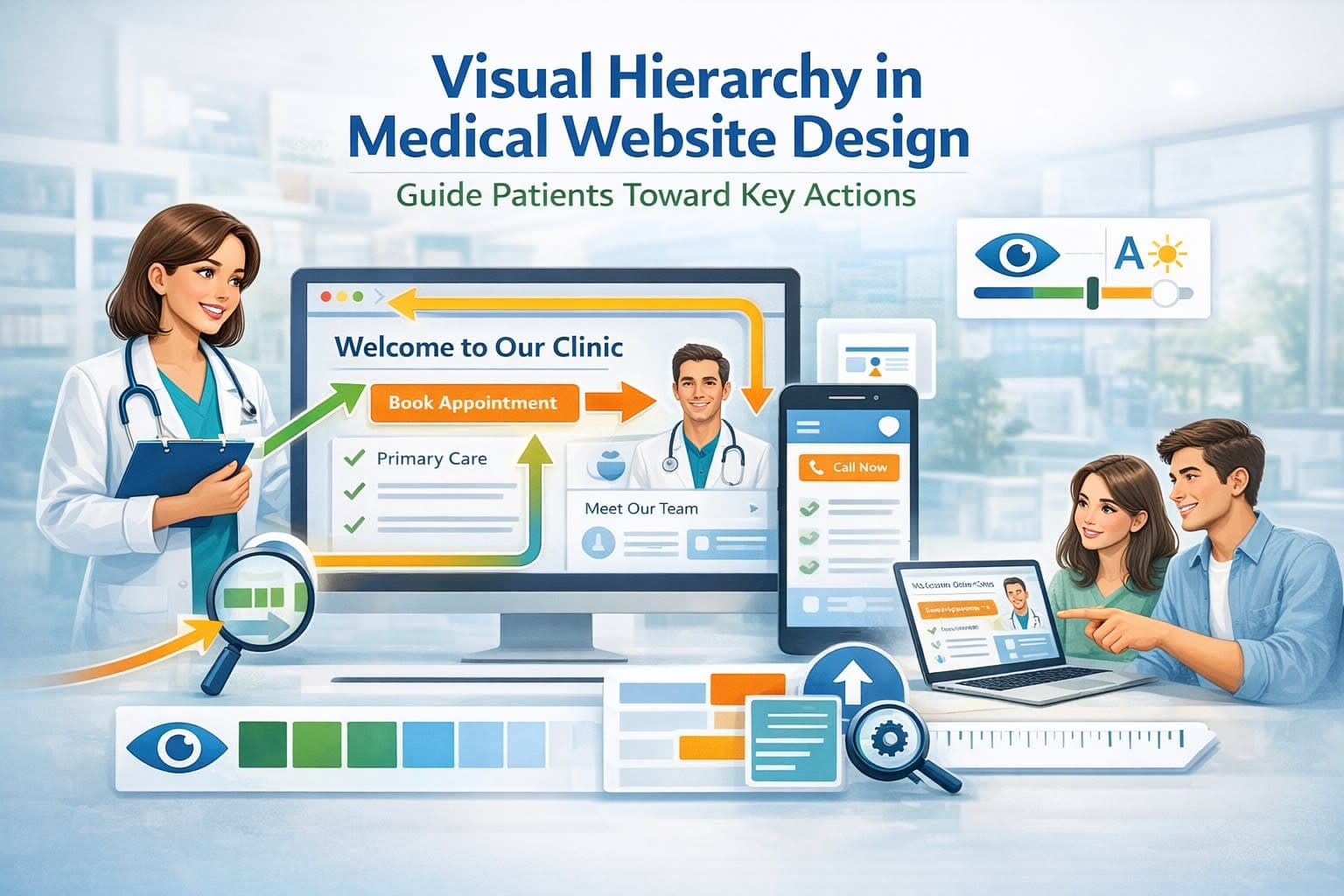
Visual Hierarchy in Medical Website Design: Guide Patients Toward Key Actions
In the complex ecosystem of healthcare marketing, your website’s visual structure is the foundation of your success. Mastering visual hierarchy web design, you ensure that your practice’s voice is heard above the digital noise. We have explored how the strategic use of size, contrast, and layout can guide users with design toward the actions that matter most. Remember that visual hierarchy is not about making a site look "pretty"; it is about making it functional, accessible, and authoritative.
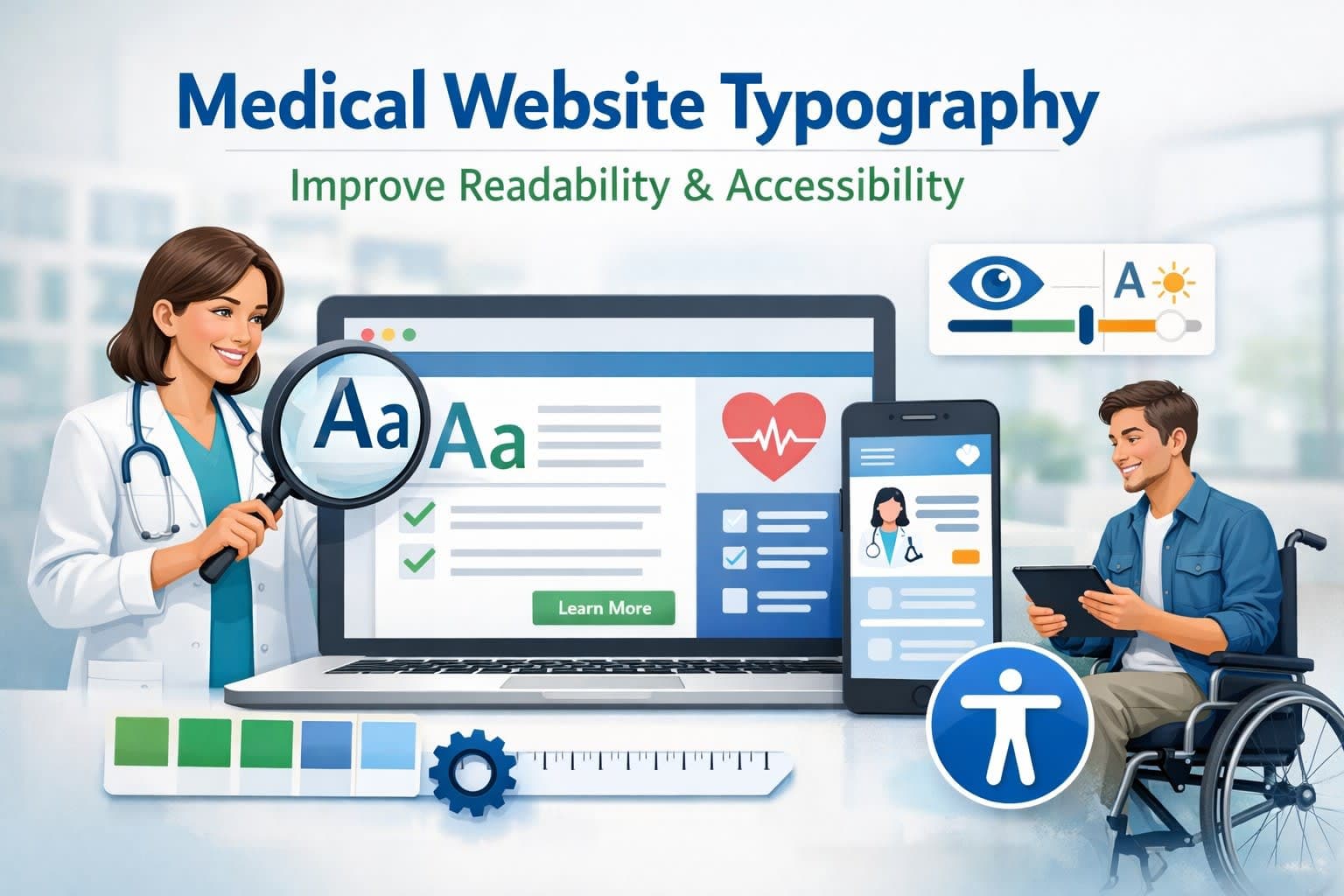
Typography & Readability for Healthcare Websites: Design That Builds Trust and Engagement
In the digital era, your website's typography is the voice of your practice. By mastering website readability best practices, you ensure that this voice is clear, authoritative, and compassionate. We have explored how the best fonts for medical websites prioritize legibility over decoration and how a strong visual hierarchy can guide a patient through even the most complex medical information. Typography is not just about choosing a font; it is about creating a frictionless path from a patient’s

Color Psychology in Medical Website Design: How Colors Influence Patient Confidence
In the competitive world of healthcare, your digital identity is often the deciding factor for a patient. By understanding and applying the principles of color psychology in web design, you can bridge the gap between a simple "online presence" and a powerful trust-building machine. We have explored how the best colors for healthcare websites—such as blue, green, and professional neutrals—can physiologically lower patient stress and communicate clinical authority
Healthcare Website Design Principles That Build Patient Trust and Credibility
Building a digital presence that accurately reflects the quality of your clinical care is a journey that requires attention to both art and science. By following medical website design best practices, you ensure that your first impression is one of authority and empathy. We have explored how visual hierarchy, intuitive navigation, and social proof work together to transform a standard webpage into a powerful patient acquisition tool. Remember that trust is not built through a single element but

How Patients Find Doctors Online: Understanding Healthcare Search Intent
Understanding how patients find doctors online is no longer optional. Patient search behavior now determines who gets visibility, who earns trust, and who gets chosen. Providers who ignore this reality rely on luck. Providers who align with it build predictable growth.
Scale Your Practice with Expert Healthcare Marketing
Your patients are searching online—make sure they find you first.